
 Back
Back

Book a Consultation

July 29, 2026
Getting a basal cell carcinoma diagnosis often comes as a surprise. You may not have had a serious sunburn in years, or you may be wondering whether something you did caused this. UV radiation is the leading cause, but it builds quietly over time.
What matters now is understanding what happened and knowing what to do next.
A BCC diagnosis is not your fault. The useful questions are practical: what is happening in the skin, what to do about a spot that worries you, and how to protect the skin going forward.
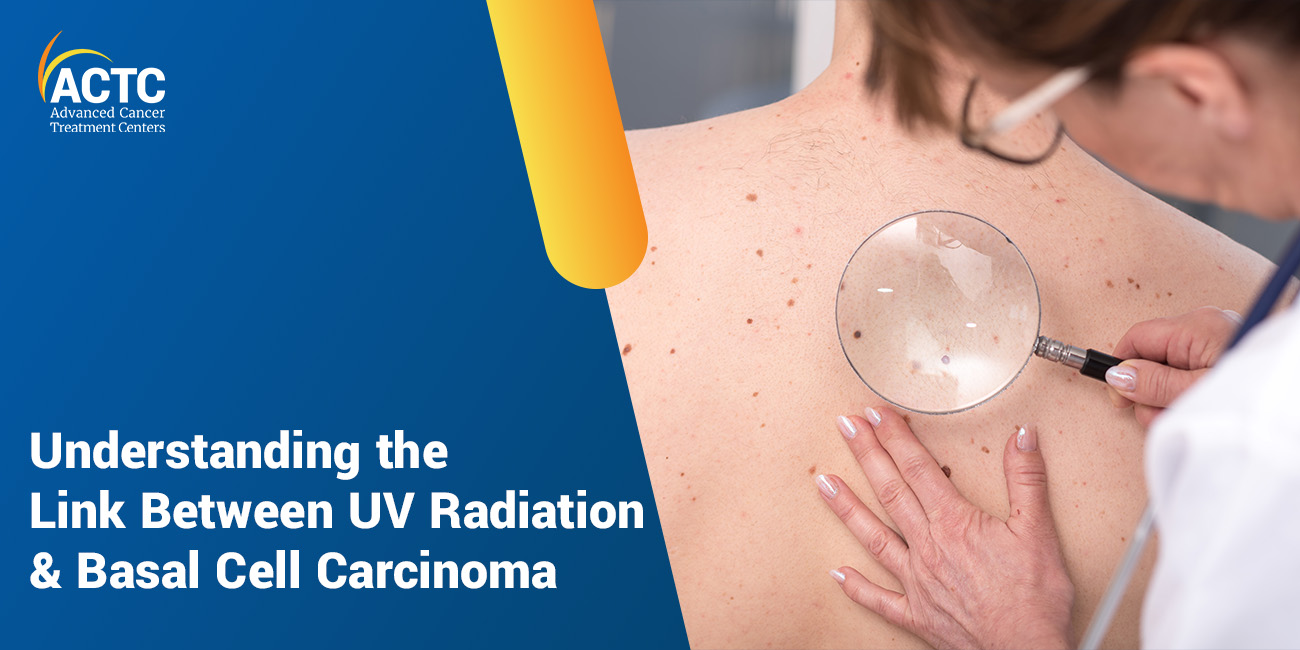
Basal cell carcinoma (BCC) is the most common type of skin cancer. It starts in the basal cells, the deepest layer of the outer skin, where new skin cells form. BCC usually appears on sun-exposed areas such as the face, ears, neck, scalp, or forearms.
Two other types of skin cancer also develop from UV-damaged skin:
Squamous cell carcinoma (SCC): starts in the middle and outer layers of the epidermis.
Melanoma: begins in pigment-producing cells and is less common but more likely to spread.
BCC rarely spreads beyond the skin, but it still needs evaluation and treatment. Left alone, it can grow deeper and become harder to treat.
Ultraviolet (UV) radiation is invisible energy that reaches your skin from the sun, tanning beds, and sunlamps. Two types matter for skin cancer.
UVB is absorbed directly by DNA, causing the mutations most closely tied to skin cancer and sunburn. UVA penetrates more deeply, creates cell stress through a different pathway, and contributes to long-term damage.
UV energy can damage the DNA inside skin cells. Your body repairs most of this damage, but not always perfectly. Errors accumulate over many years, and enough mutations can allow a cell to grow without normal controls.
UV exposure is cumulative because unrepaired damage adds up. So even without a serious sunburn, decades of routine outdoor time in Florida can still raise your risk. UV reaches your skin on cloudy days and through car windows too.
The sun is not the only UV source worth knowing about.
Tanning beds and sunlamps emit both UVA and UVB. The American Academy of Dermatology states that indoor tanning is associated with BCC, squamous cell carcinoma (SCC), and melanoma. A tan from a tanning bed is skin injury, not a sign of health.
There is no safe level of indoor tanning for skin-cancer risk. If you have a history of indoor tanning, mention it at your next skin check.
UV nail lamps used in gel manicures are a more limited concern. A 2023 lab study found that UV nail dryers can damage DNA in exposed cells. Real-world cancer risk from occasional use appears low, but not zero.
A reasonable middle path: apply broad-spectrum sunscreen to the back of your hands before a gel manicure, or use UV-protective gloves if you go often.
Contact a clinician if you notice a spot that:
Is new or has appeared recently
Is growing, changing shape, or changing color
Bleeds, crusts, or has not healed after several weeks
Itches or feels different from the skin around it
Scabs in the same place repeatedly, or looks shiny and pearly with tiny visible blood vessels
Routine screening guidelines are meant for people with no symptoms. If you actually have a spot that concerns you, don’t wait for your next annual physical—get it evaluated right away.
BCCs near the eye deserve quick attention because of how close they sit to delicate tissue. Our eyelid cancer treatment page explains why those cases often involve a specialist team. The companion post, everything you need to know about eyelid cancer, goes deeper.
For most patients, the path after a BCC diagnosis involves a dermatologist or skin-surgery specialist. Diagnosis relies on a skin exam and biopsy.
A small sample of the spot goes to a pathologist who confirms whether it is BCC, what subtype, and how it is growing. That biopsy result drives the plan.
Treatment depends on the size, location, and depth of the lesion:
Excision or Mohs surgery: used for many BCCs, especially on the face or cosmetically sensitive areas.
Curettage and electrodesiccation: a scraping and cauterizing approach for smaller or lower-risk lesions.
Topical therapy or photodynamic therapy: options for selected superficial BCCs.
Radiation therapy: used when surgery is not practical, or sometimes after surgery.
Systemic therapy: for rare advanced BCCs, targeted medications such as Hedgehog-pathway inhibitors or immunotherapy may be options.
When BCC is advanced or recurring, an oncology team becomes part of the conversation. The same is true if radiation or systemic therapy is on the table.
We serve patients in Brooksville and Hernando County who need that oncology input. Some patients come to us after a dermatologist has confirmed the diagnosis, and our team coordinates the radiation or medical oncology part of their care.
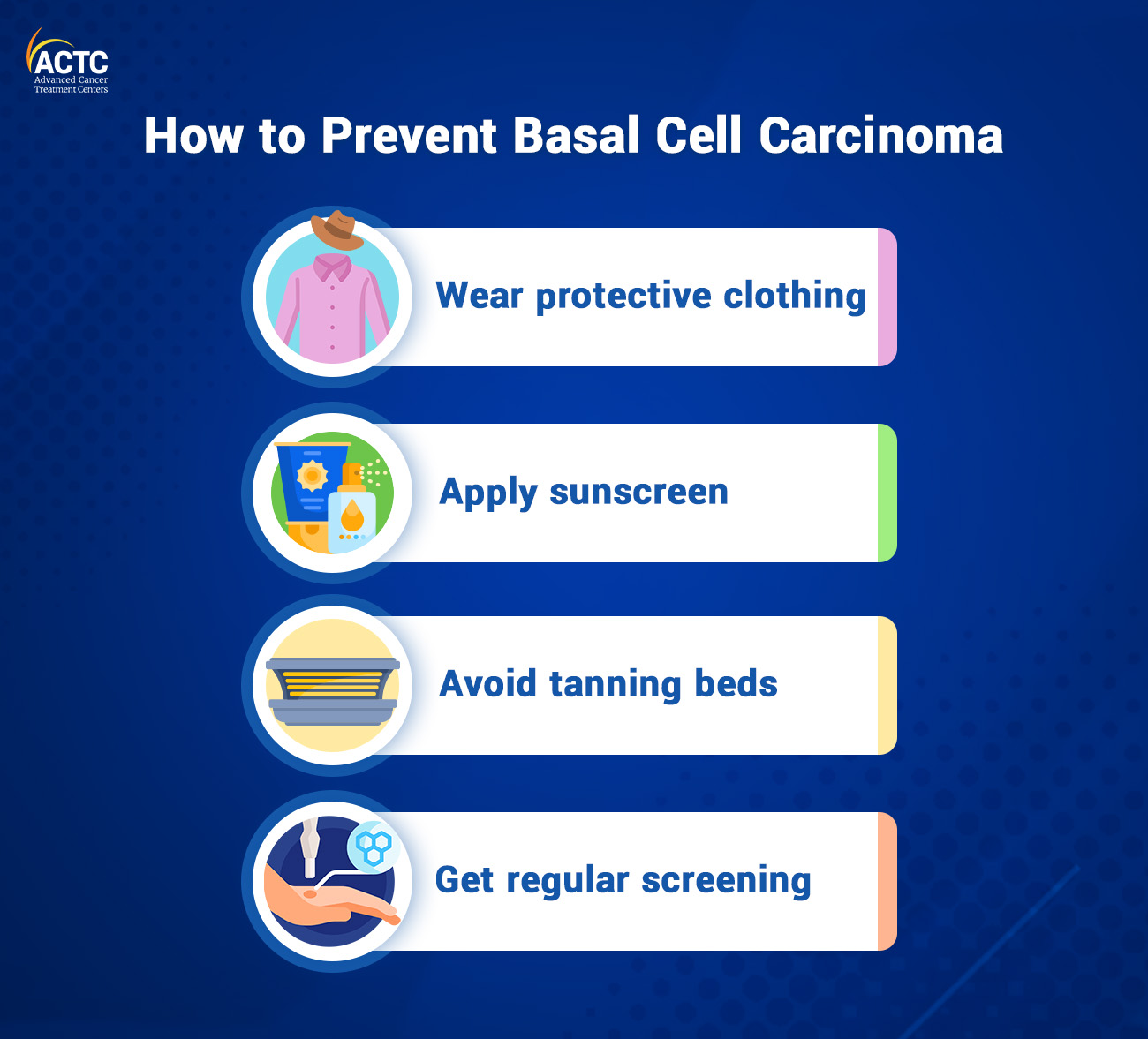
Living in Florida means real UV exposure year-round, even on overcast days. Prevention is not perfection; it is a few habits that add up. Our broader guide to skin cancer risk factors and prevention covers the full picture.
Long-sleeved shirts, a wide-brimmed hat, and UV-blocking sunglasses do more than sunscreen alone. UPF-rated clothing helps for boating, fishing, yard work, and beach days.
Try to limit direct sun between roughly 10 a.m. and 4 p.m., when UV is strongest.
Use a broad-spectrum sunscreen, SPF 30 or higher, on every patch of exposed skin. Most adults under-apply, so use a generous amount and reapply every two hours, or sooner after swimming or sweating. Do not skip ears, the back of the neck, the tops of the hands, and the part in your hair.
Skip tanning beds entirely; there is no healthy way to use them. Sunless tanning lotions and spray tans are a UV-free alternative, so they avoid the skin damage UV causes.
Use spray products as directed and keep them away from eyes, lips, and mucous membranes. For UV nail lamps, apply sunscreen on your hands or use UV-protective gloves before frequent gel manicures.
A monthly self-exam in good light helps you notice changes. A periodic full-body skin check by a dermatologist is reasonable for adults with significant sun history, fair skin, or prior skin cancers. After a first BCC, follow-up exams matter: people with one are more likely to develop another.
Yes. UV from the sun, tanning beds, and sunlamps reaches the basal cells in the deepest part of the outer skin layer and can damage their DNA. Over years, unrepaired damage can lead to a basal cell carcinoma.
Yes. The damage that contributes to BCC often comes from years of routine, unprotected daily exposure, not one severe burn. UV exposure is cumulative, and unrepaired DNA errors build over time.
Yes. Indoor tanning emits both UVA and UVB and is associated with BCC, squamous cell carcinoma (SCC), and melanoma. There is no safe level of indoor tanning for skin-cancer risk.
Sometimes, yes. Many BCCs are handled by dermatology. We support patients whose care includes
radiation oncology
or
medical oncology.
Advanced or recurrent cases may be referred to our team by a dermatologist.
If a dermatologist has flagged a complex basal cell carcinoma or recommended radiation or systemic therapy, our team in Brooksville can walk through your options close to home. Call 352-345-4565 or request an appointment to talk with a member of our care team.


July 17, 2026
Sadness during cancer is human. Depression is a treatable medical cond...
KNOW MORE

July 17, 2026
A clear, week-by-week guide to post-chemo recovery at home. What to ex...
KNOW MORE

July 17, 2026
Radiation can change how your mouth feels and food tastes. Here is wha...
KNOW MORE
January 07, 2026
A chemo port is a small device placed under your skin that makes recei...
KNOW MORE
December 24, 2025
It's natural to wonder if testosterone replacement therapy (TRT) is sa...
KNOW MORE

December 24, 2025
A rash that will not calm down is scary, especially when it changes or...
KNOW MORE
Subscribe to our newsletter
Social Links


 15211 Cortez Boulevard, Brooksville, Florida 34613